

Arizona is growing fast—more homes, more businesses, and more demand for the reliable electricity that powers our daily lives. As we look ahead, we need smart, practical solutions that keep the lights on, costs down, and our grid secure. That’s why I’m excited to highlight a thoughtful citizen-proposed bill idea put forward by Jim Ross, a resident of Legislative District 7. Jim has compiled a comprehensive draft proposal for legislation that focuses on baseload reliability, innovative nuclear technology, and common-sense safeguards for our state’s energy future.
While this is not yet an officially introduced bill, it represents the kind of grassroots input that can shape strong public policy. As an advocate who believes in empowering everyday voices, I appreciate constituents like Jim taking the time to research and propose detailed ideas. Here’s a closer look at the key elements of his draft proposal.
Building a Strong Foundation with Baseload Generation
The core of Jim’s proposal is a clear priority: Arizona utilities should meet their constant, round-the-clock energy needs through baseload generation as quickly as possible. Baseload plants provide steady, uninterrupted power 24/7, all year round—making them the most reliable and often the least costly option for consumers.
Jim’s draft calls for baseload to be the true foundation of our energy mix, with a specific standard: utilities should maintain baseload capacity at least 10% above the lowest demand on the year’s highest-demand day. This built-in buffer helps prevent shortages and keeps essential services running smoothly.
Intermediate and peaking plants would still play supporting roles for daily fluctuations and short spikes, but they would supplement—not replace—baseload power.
Embracing the Future: Why Small Modular Reactors (SMRs) Are a Game-Changer
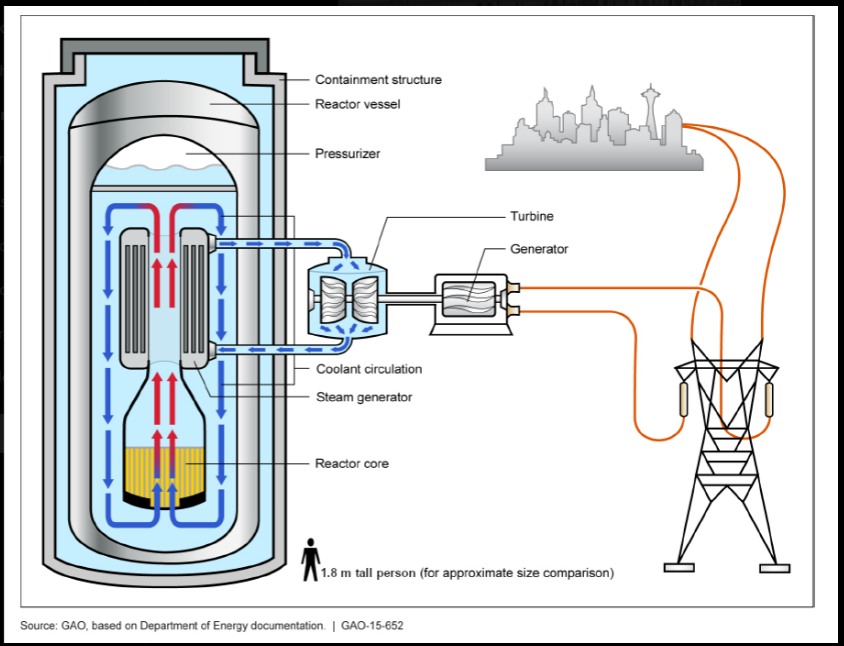
One of the most forward-thinking and exciting parts of Jim’s proposal is its strong endorsement of Advanced Small Modular Reactors (SMRs). Jim identifies SMRs as the most promising technology for meeting Arizona’s growing future demand and requires utilities to address them in their Integrated Resource Plans.
SMRs represent the next generation of nuclear power, offering a host of advantages that make them ideal for reliable, clean energy in a rapidly changing world. Unlike traditional large-scale nuclear plants, which can take over a decade and cost billions upfront to build, SMRs are designed for factory production—much like aircraft or automobiles. This modular approach drastically shortens construction times, often to just a few years, reduces on-site preparation, and lowers overall costs through economies of scale in manufacturing. (thechemicalengineer.com)
Key benefits include:
- Enhanced Safety: Many SMR designs incorporate passive safety systems that rely on natural forces like gravity and convection for cooling, eliminating the need for external power or operator intervention in emergencies.
- Flexibility and Scalability: Modules can be added incrementally as demand grows, allowing utilities to match capacity precisely without massive overbuilds. They’re also suitable for a wider range of sites, including those unsuitable for large plants.
- Lower Financial Risk: Smaller size means lower initial capital investment per unit, making financing easier and attracting a broader range of investors.
- Clean and Reliable Baseload Power: SMRs provide constant, carbon-free electricity—perfect for supplementing intermittent renewables and powering high-demand applications like data centers.
- Economic and Innovative Edge: Factory-built quality control improves reliability, while advanced designs (including those using nontraditional coolants like liquid metals, salts, or gases) promise even greater efficiency and safety. en.wikipedia.org, popsci.com
As of late 2025, momentum is building rapidly. Companies like NuScale have received full NRC design approvals for uprated models (up to 77 MWe per module), positioning them for deployment by 2030. Other leaders, such as GE Hitachi with the BWRX-300 and X-energy, are advancing projects worldwide, with federal support accelerating development. The proposal urges Arizona utilities to explore participation in ongoing SMR research projects, backed by substantial federal funding for light water-cooled designs and innovative alternatives.
By prioritizing SMRs now, Arizona can lead in adopting this technology, ensuring energy independence, job creation in high-tech manufacturing, and a resilient grid for generations to come.
Preserving Proven Resources
Jim’s draft also calls for practical reviews of existing assets. Utilities would assess whether restarting shuttered coal-fired plants makes financial sense for baseload needs. For nuclear power, Arizona Public Service would be directed to make every effort to extend operations at the Palo Verde Nuclear Generating Station beyond current license periods until SMRs are ready to take over.
Protecting Ratepayers from Data Center Demands
With massive data centers moving into Arizona, the proposal addresses their huge energy appetite head-on. Large data warehouses would be required to build and fully fund their own dedicated generation facilities — separate from the grid serving homes and other businesses. All costs for construction, operation, and maintenance would fall on the owners, ensuring everyday ratepayers aren’t footing the bill for Big Tech’s power needs – an absolute necessity!
Additional Safeguards and Oversight
- Until a sufficient baseload is in place, utility Integrated Resource Plans would need legislative review and approval for added accountability.
- On security, the draft emphasizes avoiding equipment from China for new or refurbished solar, wind, or other facilities.
- Finally, it prohibits Arizona utilities and their contractors from implementing ESG (Environmental, Social, and Governance), CRT (Critical Race Theory), or DEI (Diversity, Equity, and Inclusion) programs — keeping the focus on delivering reliable, affordable electricity.
Why This Matters
Jim Ross’s citizen-proposed legislation offers a clear-eyed, reliability-first approach at a time when Arizona needs it most. By emphasizing baseload power, embracing next-generation nuclear like SMRs, and including practical protections, this draft could help guide our state toward energy independence and resilience.
Ideas like these start with engaged citizens. Thank you, Jim, for putting this thoughtful proposal together and sharing it with your state representatives. I encourage all Arizonans to learn more, discuss energy policy, and make their voices heard — because the best solutions often come from the ground up.
By Barby Ingle – Barby Ingle is an advocate, community leader, and commentator on issues affecting everyday Arizonans. This article discusses a citizen-drafted proposal compiled by Jim Ross of Legislative District 7 and does not represent officially introduced legislation, yet.
_________________________
Legislation Proposed for all electric generation operating in the State of Arizona
December 19, 2025 – Compiled by Jim Ross
Baseload Generation: Arizona Utilities shall, as possible, meet their consistent energy demand through the use of baseload generation. Such plants are those that are able to produce a constant, steady, uninterrupted power supply throughout the day and night, throughout the year. Baseload generation best ensures essential services remain online. Such plants are best for rendering reliable and least costly electricity. Baseload generation must be the foundation in utilities energy mix.
“The amount of baseload that a utility should have available at any given time is at least ten (10) percent greater than the lowest demand on a day in which such demand is at its highest level during the year”.
Intermediate Plants can supplement baseload generation but should not offset it. It and Peaking should be used for meeting demand that fluctuates during the day, with peaking plants used for short, high-demand spikes.
Small Modular Reactors (SMR) The most promising upcoming technology for meeting future load demand is the use of Advanced Small Modular Reactors (SMR) technology. Arizona utilities need to address this technology in their Integrated Resource Plans.
Major components of SMRs are envisioned to embrace limited on-site preparation and substantially reduce the lengthy construction times typically required of the larger units. A few of the benefits of SMR are simplicity of design, enhanced safety, the economics and quality of factory production, and more flexibility (financing, siting, sizing, and end-use applications) compared to larger nuclear-powered plants. Also, additional modules can be easily be added incrementally as demand for energy increases.
SMRs provide simplicity of design, enhanced safety features, the economics and quality afforded by factory production, and more flexibility (financing, siting, sizing, and end-use applications) compared to larger nuclear power plants. Additional modules can be added incrementally as demand for energy increases.
SMR Research Projects: AZ utilities need to determine how they can participate in one or more of the research projects currently underway that aim to prove the use, portability, financial feasibility, and safety of this technology. The federal government is providing substantial support to the development of light water-cooled SMRs, which are under licensing review by the Nuclear Regulatory Commission (NRC) and will likely be deployed in the late 2020s to early 2030s. The government is also interested in the development of SMRs that use nontraditional coolants such as liquid metals, salts, and gases for the potential safety, operational, and economic benefits they offer.
Coal-fired Plants: Utilities need to assess the financial feasibility of restarting coal-fired plants shuttered in recent years.
Palo Verde: Every attempt is to be made by APS to keep the Palo Verde Nuclear Plant operational to meet its customers’ electric needs beyond the current 20-year license periods until SMR technology can be utilized.
Data Warehouses: The energy needed to operate large Data Centers shall be met by the construction of generation facilities fully paid for by and dedicated for the sole use of their owners. Such facilities shall be separate and apart from those built and operated to meet the utilities’ residential and other commercial customers. The operation and maintenance of such facilities shall be entirely paid for by such owners.
Utilities Integrated Resource Plans: Until such time as each utility has developed sufficient baseload generation to meet the level of its constant demand, Utility Integrated Resource Plans need to be submitted to the AZ State Legislative body for its review and approval before such plans can be finalized.
Equipment from China: Construction of new or refurbishment of existing generation or transmission, or distribution facilities: Every effort is to be made to ensure no solar, wind, or other facilities, equipment, or parts are manufactured, constructed, or fabricated in China.
ESG, CRT & DEI: No Arizona electric utility nor its parent, subsidiary, or any of its contractors that furnish it with energy, equipment, parts, or service may practice the social programs of Environment, Social and Governance, Critical Race Theory, or Diversity, Equity and Inclusion.
