

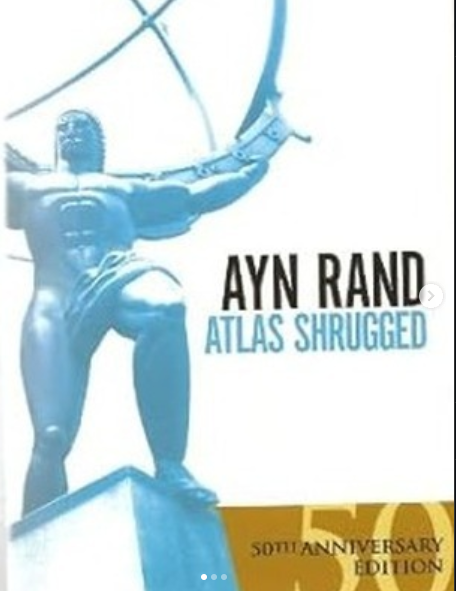
Why “Atlas Shrugged” Remains One of My All-Time Favorite Books: A Deep Dive into Ayn Rand’s Masterpiece
Hello, fellow readers and thinkers! If you’ve ever picked up a book that completely reshaped how you view the world, you know the feeling I’m talking about. For me, one of those transformative reads is Atlas Shrugged by Ayn Rand. It’s solidly in my top five books of all time, and yes, I’ll admit it upfront — it’s a hefty read. Clocking in at over 1,000 pages, it took me a full six months to plow through it the first time. But let me tell you, every single page was worth the effort. This isn’t just a story; it’s a profound exploration of human potential, society, and the choices we make.
Below, I share why I love it so much, break down its key themes, reflect on my personal journey with the characters, and even compare the book to its movie adaptations (spoiler: there are some notable differences). If you haven’t read it yet, consider this your nudge to dive in!
First, a quick overview for the uninitiated. Published in 1957, Atlas Shrugged is set in a dystopian United States where excessive government regulations and collectivist policies are stifling innovation and productivity.
The story follows Dagny Taggart, a brilliant railroad executive fighting to keep her family’s company, Taggart Transcontinental, afloat amid economic collapse. As top industrialists mysteriously disappear, Dagny uncovers a hidden society led by the enigmatic John Galt, who orchestrates a “strike of the mind” — where the world’s creators withdraw their talents from a society that exploits them.
It’s a tale of individualism versus collectivism, with high-stakes drama involving railroads, steel mills, and philosophical showdowns. No wonder it’s one of the bestselling books ever, with millions of copies sold worldwide.
But it’s also polarizing — people either adore it for its bold ideas or criticize it for its unapologetic stance on capitalism and self-interest. Love it or hate it, you can’t ignore its impact.
What draws me back to Atlas Shrugged time and again are its rich themes, which go far beyond a simple plot. At its core, the book is about the role of the mind in human existence, as Rand herself described. More at www.aynrand.org
It champions producers — the innovators, inventors, and entrepreneurs — who create value through reason and effort, contrasting them with “parasites” who rely on force or manipulation to survive per www.atlassociety.org
Other key ideas include property rights (the moral claim to what you’ve earned), the theory of sex (portrayed as a celebration of mutual values and achievement), the fraught relationship between government and business (where overregulation leads to ruin), the “sanction of the victim” (how the productive enable their own exploitation by not standing up), and overarching philosophy — specifically Objectivism, Rand’s system emphasizing reason, individualism, and rational self-interest.
These aren’t just abstract concepts; they are part of the fabric my parents taught me growing up, and they’re woven into the characters’ lives, making the book a masterclass in social interaction. With my degree in social psychology, I was enthralled with this book from start to finish. I question how societies function, who really drives progress, and why pursuing personal happiness isn’t selfish — it’s essential.
On a personal level, reading Atlas Shrugged was like holding up a mirror to my own life. When I started, I immediately identified with Dagny Taggart, the fierce, competent woman battling bureaucracy to achieve her goals as an entrepreneur, or Hank Rearden, the steel magnate who invents a revolutionary metal but faces endless obstacles. But by chapter three, it hit me: I’m actually more like John Galt — the visionary who steps back to let the world see the consequences of undervaluing creators. I am a creator who was created by the ultimate creator. It was a revelation! The book has a character for everyone, from the idealistic inventor to the corrupt politician.
Who are you in this story?
Maybe you’re Francisco d’Anconia, the playboy with a hidden depth, or perhaps Lillian Rearden, who represents the pitfalls of envy. Identifying with these archetypes isn’t just fun; it’s insightful for me. Since finishing the book, I’ve referred back to my highlighted passages and dog-eared notes countless times for guidance on everything from business decisions to personal relationships. It’s like having a philosophical mentor on my shelf.
Of course, no discussion of Atlas Shrugged is complete without mentioning the film adaptations. The book was turned into a trilogy of movies: Atlas Shrugged: Part I released in 2011, Part II: The Strike, in 2012, and Part III: Who Is John Galt? in 2014.
You can check out the official site for more details: http://www.atlasshruggedmovie.com/.
The films aimed to bring Rand’s epic to the screen, following Dagny’s quest and the unfolding mystery of the disappearing industrialists. They even include modern updates, like setting the story in a near-future America with high-speed rails and economic turmoil that feels eerily relevant today.
That said, the movies aren’t a perfect match for the book — and that’s where the differences come in. For starters, the films condense the massive novel into about six hours total, so they feel like a “Cliff Notes” version, hitting the high points but skimping on the depth that I love in the book version.
Subplots and character developments are streamlined or cut entirely, which means you lose some of the philosophical richness that makes the book so compelling. For example, John Galt’s famous radio speech — a 60-page monologue in the novel about Objectivism — is drastically shortened in Part III, diluting its impact.
Character portrayals shift too: In the book, Galt first appears humbly working in a diner, emphasizing his voluntary withdrawal from society, but the films alter his introduction and arc for pacing.
One of the most criticized aspects is the recasting — none of the main actors (like Dagny, played by Taylor Schilling in Part I, Samantha Mathis in Part II, and Laura Regan in Part III) return across all films, which breaks continuity and makes it hard to connect with the characters.
Critics panned them for missing the novel’s essence, turning a thought-provoking epic into a more straightforward drama.
If you’re a purist, the book wins hands down for its introspective depth and unfiltered philosophy. But the movies can be a fun, if flawed, entry point — they modernize elements like technology and make the story more accessible for visual learners.
In the end, whether you start with the book or the films, Atlas Shrugged challenges you to think about your role in the world. Are you a creator, or are you letting others dictate your path? I highly suggest grabbing a copy and finding out for yourself. It’s not just a read; it’s an experience that sticks with you. Have you read it? Drop a comment below — who do you identify with in the story?
Until next time, keep shrugging off the ordinary.
Barby Ingle
